Make life harder (and better): Learn another language.

Audio transcript
(SOUNDBITE OF MUSIC)
EMILY KWONG, BYLINE: I want you to show up at the airport in Puerto Rico one Christmas, and Bad Bunny is there. And…
BRITTANY LUSE, HOST:
Yes.
KWONG: …He’s like, in Spanish, which I don’t know how to say, Brittany, I’ve been waiting for you.
LUSE: (Laughter) Oh, my God. I’m like, if my tutor hears this, he’s going to be like, girl, you should actually know exactly how to say that phrase.
(SOUNDBITE OF TAPE RECORDER)
LUSE: Hello, hello. I’m Brittany Luse, and you’re listening to IT’S BEEN A MINUTE from NPR, a show about what’s going on in culture and why it doesn’t happen by accident.
(SOUNDBITE OF MUSIC)
LUSE: Today, I have a very special guest here with me, Emily Kwong. Welcome to IT’S BEEN A MINUTE.
KWONG: Hi. Hi. It’s so good to be here, Brittany.
LUSE: So good to have you. It’s so good to have you. So for those of you who don’t know, Emily is one of the hosts of NPR’s Short Wave, our science podcast. But we are hanging out today because we have something in common.
KWONG: Is it that we both love Mariah Carey?
LUSE: That is true. I’ll say that’s true.
KWONG: Yes.
LUSE: We might both be lambs, but it’s not just that. It’s that we are both second language learners. I am learning Spanish.
KWONG: And I’m learning Mandarin.
LUSE: Can I tell you something, though?
KWONG: Yeah.
LUSE: It’s really hard work (laughter).
KWONG: Oh, Brittany.
LUSE: I hate having so much homework as an adult. Like, I honestly – I didn’t even do my homework like that when I was a kid.
KWONG: Yeah, it is homework. It’s flashcards. It’s studying. I honestly think, Brittany, that’s why the Mandarin language has been a slow burn for me. I’ve been kind of flirting with the language, you know, will she? Won’t she? And I have decided this is the year I think I’m going to commit and just call upon my ancestors to get me through and learn more than just, like, ni hao. That would be really nice.
LUSE: (Laughter) I’m in a similar place. I’m locking in.
KWONG: Ooh, nice.
LUSE: Whenever it gets to feel hard, though, I try to think about, like, why I’ve decided to do this. My husband’s family lives in Puerto Rico, and, you know, his parents usually, they will talk to each other in Spanish. But whenever I’m there, you know, his family and friends switch to English for me. It just feels like I’m inconveniencing them in a way as a guest. And I don’t want them to have to do that.
KWONG: You’re describing my whole family dynamic. Just picture young Emily in Flushing, Queens, at these family reunions. Everyone’s eating. The bowls of rice are flying, and everybody’s talking in Mandarin, except for me, my sister and my mom, my white mom. Love her. But my family’s just translating for us and, like, accommodating us in English. And I think it stunk. It stunk that I couldn’t connect with my family in their own terms. And I want to learn for that reason. I want to connect with them, and I want to be able to communicate to my father because Mandarin was his first language. And even though he’s forgotten a lot of it, it’s still a language that I think gives him a lot of comfort.
LUSE: Well, as we said, learning a second language is a hobby that asks a lot of you, not just time and sometimes money, but also, like, pride (laughter). You know, when you’re first starting off, you sound so bad and make mistakes often. It is very humbling.
KWONG: It’s actually humiliating.
LUSE: Yes, yes. And it’s so much easier to rely on other people speaking English.
KWONG: And I think it’s easier to rely on technology.
LUSE: Yeah.
KWONG: You know, on my phone, there are apps that translate English to Mandarin for me. They allow me to scan a menu and read what it says just by hovering my phone over it, so I never have to learn the characters. Captions in movies that get put on. And AirPods – they offer live translation.
LUSE: Yeah. Yeah, I’ve seen that.
KWONG: So, it’s like, when – we got to just communicate. What is the point of learning the hard way?
LUSE: You know, I actually came across this article on The Cut by Kathryn Jezer-Morton. She’s been on the show before. She’s awesome. It’s called “In 2026, We Are Friction-Maxxing.” Friction-maxxing basically means choosing to not smooth your life over with convenience. And it really spoke to something that I’ve been thinking about for a while. Like, the challenge is part of the point.
(SOUNDBITE OF MUSIC)
LUSE: This is Choosing Inconvenience. For the next few weeks, we’re getting into stories of people who choose the difficult paths toward their goals, rather than relying on convenient tech and what they learn along the way.
(SOUNDBITE OF MUSIC)
LUSE: OK. We are going get into that, what we both learned from doing the hard thing of acquiring or trying to acquire a new language. But first, I wanted to get into some of the cultural barriers that keep people from even wanting to try. Emily, I heard this was something that kept you from learning Mandarin, even though you wanted to.
KWONG: Yeah. I would just like to say that shame is a huge cultural barrier. I remember back in high school – OK? – I was at my cousin’s Chinese school. I just sidled up to his teacher and was like, hey, I know I’m, like, old.
(LAUGHTER)
KWONG: I know I’m 16, but can I pick up Chinese? And he looked me up and down and was like, ma’am, it’s far too late for you. You are a lost cause.
LUSE: No.
KWONG: No, no, no, it’s not true. You can learn a second language and become, like, what’s called a sequential bilingual. But this idea that you can only learn a language as a child has been kicking around for a long time, and it bothered me. Like, I wanted to know is it true, and where did it come from. And I traced it to something called the critical period hypothesis. We reported it in a Short Wave episode. And it basically came out of the ’50s and ’60s and argues that there’s this almost magical window for learning a second language that is somewhere between the age of 2 and puberty.
LUSE: How much of that is actually true?
KWONG: The part that’s true is that there is a biological window where language learning is the most automatic. It’s just easier. And that’s because in the first three years of life, your brain is developing 1 million new neural connections per second.
LUSE: (Vocalizing).
KWONG: Yeah. According to researchers at the Center for the Developing Child at Harvard University.
LUSE: Dang. OK, so babies are going, like, big brain mode, basically.
KWONG: Yes. Yes, their brains are very elastic, and it makes it easier for them to learn new languages. But listen, just because it’s harder for us olds does not mean it is impossible. We are still forming a ton of new neural connections after puberty. You never stop learning, right?
LUSE: I mean, you know, we might be, you know, 30-something-year-old dogs, but we can still learn new tricks.
KWONG: Yes, I agree. So the person who taught me this, by the way, is a neurolinguist whose name is Sarah Frances Phillips. She’s based at the University of Arizona, and she said that researchers maybe shouldn’t call it the critical window. Maybe it’s more like the sensitive window.
SARAH FRANCES PHILLIPS: If we think about language, like, it’s not just our brains involved, right? We also have to use our eyes to perceive what we see and we use our mouths if we’re oral producers of language. And these are all habits that we’ve developed during our early childhood years. So once you become an adult, now you have to learn how to break those habits. So it’s a little harder, but it’s not impossible.
LUSE: Can I jump in?
KWONG: Yes.
LUSE: OK, I have another little reframe of how we can think about language learning as adults. This is courtesy of Nicole Ziegler, associate professor in the Department of Second Language Studies at the University of Hawaii. My producer, Liam, spoke to her.
NICOLE ZIEGLER: There are advantages, some advantages that kids have for language learning, for sure. But then, you know, as we’re older learners, we also have advantages. We know how to study. You know, we know how to motivate ourselves, right? We have different opportunities for learning that kids don’t have.
KWONG: OK, so you’re saying that these kids should actually be impressed with my language learning abilities.
LUSE: I mean, maybe they should be.
KWONG: But, yeah, learning that the critical period is not actually so critical has helped move me into a headspace where Mandarin is something I know I can learn. I know it’s going to be hard, but it is possible. And it helps me move away from the shame of not knowing it and make what was once a chore more of a pleasure. And that’s been really nice.
LUSE: I love that.
Coming up?
KWONG: (Non-English language spoken).
LUSE: (Non-English language spoken).
Stick around.
(SOUNDBITE OF MUSIC)
LUSE: You’ve given me a little neuroscience. I know you’re a science girlie.
KWONG: I am.
LUSE: So I’m going to give you a little neuroscience in return.
KWONG: It is my love language. I want to hear it.
LUSE: (Laughter) OK. So it’s true that I want to be able to talk to my husband’s family in their primary language. But as I get older, I’ve also started thinking a lot more about my health, gut health, joint health and especially brain health.
KWONG: Yeah.
LUSE: And can I tell you, I wasn’t at all surprised that the challenge of learning a new language is good for your brain. But I was surprised that once you get fluent, those benefits stick.
(SOUNDBITE OF MUSIC)
VIORICA MARIAN: Knowing two or more languages is like a workout for your brain.
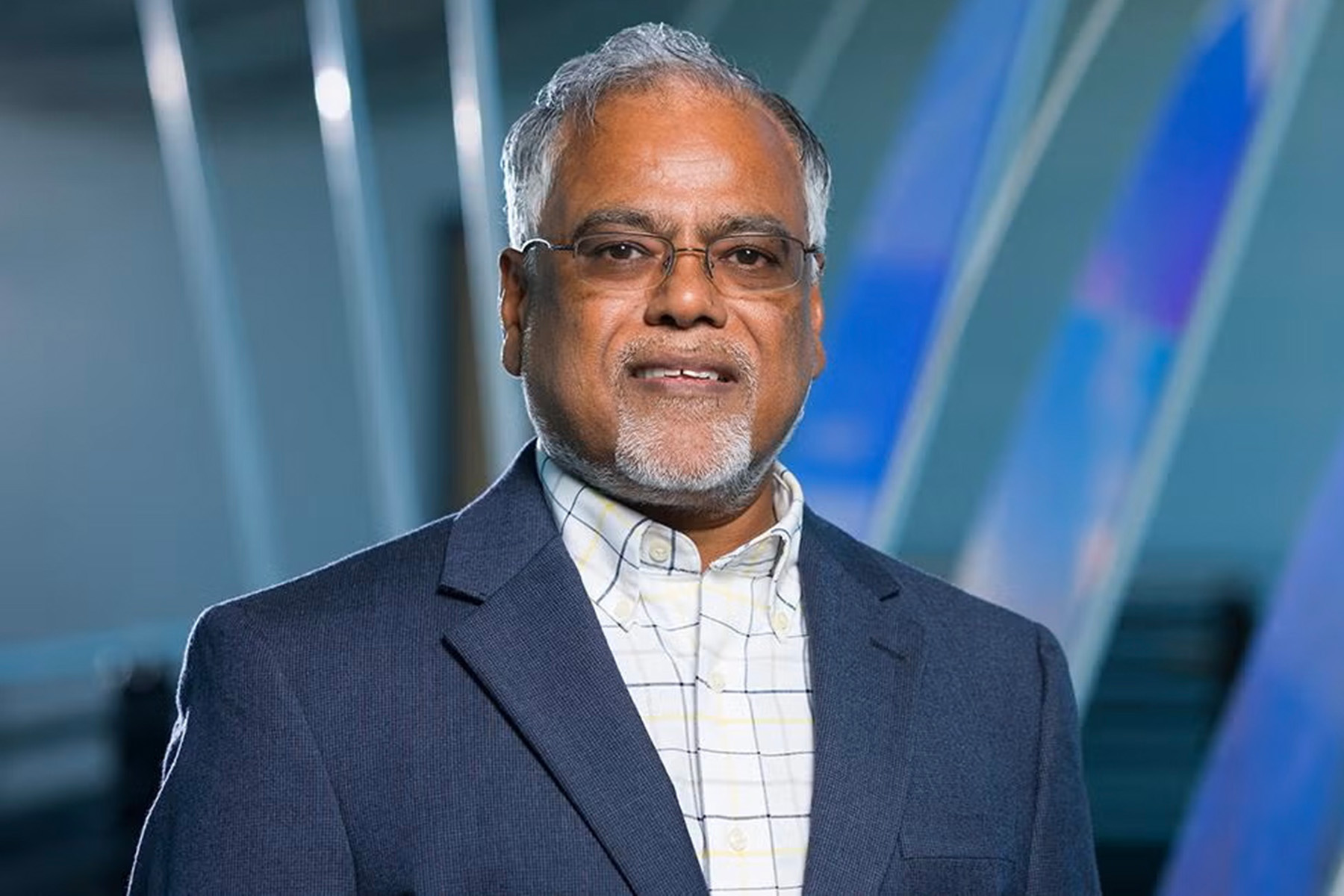
LUSE: That’s Viorica Marian. She’s a psycholinguist and cognitive scientist who teaches at Northwestern University. She also wrote a book called “The Power Of Language.” She spoke to my producer, Liam.
MARIAN: We used to think that when you use a language, you turn off all the other languages you know. But that’s actually not the case. When you know multiple symbolic systems, which is what a language is, your brain constantly keeps all of them active to some extent. Your brain has to constantly give the green light to the correct language and the red light to the incorrect language.
KWONG: This sounds like passive strength training, but for your brain.
LUSE: Exactly.
MARIAN: Of course, there are other ways you can exercise your brain, and people often do that. They engage in crossword puzzles and Sudoku and playing chess and reading and all kinds of other cognitively challenging activities. However, for the most part, those activities you have to take time out of your day to engage in. Whereas if you’re bilingual, once you’ve learned that language, you are earning those benefits as you go about your life.
KWONG: Just so I can feel really good about myself today, what are those benefits?
LUSE: Well, Viorica says being bilingual or multilingual can help the brain build cognitive reserve. I had to look this up, but basically, that means your brain’s agility. I also found out that the concept of cognitive reserve came out of the ’80s when researchers discovered that some people’s brains looked like they had advanced Alzheimer’s, but the people they studied had no symptoms.
KWONG: Whoa.
LUSE: Right. So the researchers theorized this was because some people have enough cognitive reserve for their brains to kind of build around damage and just keep going as usual.
MARIAN: And there is now evidence suggesting that individuals who speak two or more languages develop Alzheimer’s and other types of dementia on average four to six years later than monolinguals.
LUSE: It really is like being, like, buff as hell, but on the inside.
KWONG: (Laughter) I’m just amazed hearing this.
LUSE: (Laughter).
KWONG: Just, like, because I hadn’t thought about the brain health part, you know? My desire was purely social, not only for Mandarin, but any language, right? Like, when you travel, you know that moment when you’re ordering at a restaurant or taking public transit and you can say a little bit, and people’s eyes light up? And they’re like, oh, this isn’t just an English-speaking American. This is someone who’s trying.
LUSE: Yeah.
KWONG: And there’s a joy there and a relief that I’ve chosen to struggle in their language instead of making them struggle in mine.
LUSE: Yeah, I mean, that actually reminds me of something that Luke Plonsky, professor of applied linguistics at Northern Arizona University, he said something to my producer Liam about using translation technology over learning the language yourself.
LUKE PLONSKY: Those kinds of apps and tools, I think they could be great for sort of transactional language purposes. But I think you’re sort of missing out on the cool experience of sort of the struggle that goes along with trying to interact in your second language, the satisfaction that you feel when you’re successful communicating in your second language, even if it’s at the word and phrase level, even if it’s getting a joke.
LUSE: Like, even typing a single word you don’t know into Google Translate, it could keep us from learning the information in other ways and retaining that information.
(SOUNDBITE OF MUSIC)
ZIEGLER: I started learning German in high school and in college.
LUSE: That’s Nicole Ziegler again, associate professor in the Department of Second Language Studies at the University of Hawaii.
ZIEGLER: It was mostly memorization, mostly drill based. And then when I moved to Germany, after I graduated college, I had a lot of trouble. I couldn’t figure out how to order food. And later on, I worked at a restaurant, and it was in this experience working at a restaurant that I learned a lot of German. There was one experience where a customer was trying to ask if there was ginger in the food she wanted to order. And I never heard the German word for ginger. I didn’t know what it was. And we got involved in this negotiation where she was trying to explain it to me and she’s like, it’s spicy. It burns. And, you know, she’s like, it’s a root, it gets stuck in your teeth, and we eventually figured it out.
And it was a very memorable experience, so I never forgot the word for ginger after that. And later on, when I went back to graduate school, I learned about the interaction approach to SLA, which is the idea that we learn languages when we communicate with people, when we interact with people. And I recognize my experience that when we have a communication breakdown and we have to negotiate and we have to figure things out, that creates an ideal environment for learning.
KWONG: I love this story so much. And I want to know what is the German word for ginger?
ZIEGLER: Ingwer. I think about it a lot, actually (laughter). My German learning experience was, you know, decades ago. So that kind of tech was not an option. And I often think about, you know, if it was, you know, I could have just pulled it up on my phone. We would have known exactly what it was, and we would have gone on with our day. And I probably never would have learned the word for ginger.
LUSE: Nicole’s experience with ingwer, it makes me think about, like, a phrase that I know in Spanish now, specifically because I learned it through a meme (laughter). And it’s this girl going, (speaking Spanish). Basically like, enough already with this stupidity. And now I know whenever I hear that I’m never going to forget it because whenever I hear that word or that phrase, my mind, in my mind’s eye, I see this girl crying in the meme, being like, enough. Enough already. And I’m like, Sis, I get it.
KWONG: Yes. ‘Cause if you use an app to translate a word or phrase, like, you might understand what’s being said, but you’re not going to get the context. You’re not going to get the emotions at the heart of it all, and it might not stick around in that deep, lasting way.
LUSE: Exactly. Viorica was also skeptical of relying on AI-powered translation, especially for important stuff.
MARIAN: Yes. It is definitely wonderful to have access to this technology that allows you to translate instantaneously from any language into any other language. It’s certainly not possible for anyone to learn all 7,000-plus languages that exist in the world. But at the same time, LLMs, large language models, are not always accurate in how they translate information. They can make mistakes, sometimes very serious mistakes. So it’s not a problem when what you are translating is not consequential. But if we are talking about medical decisions during surgery or doctor’s appointments, delegating that to an AI without human supervision can be quite risky.
LUSE: I mean, I feel like you’re also missing out on a lot of cultural aspects of language with translation, too. Like, one of the most interesting things that I’ve learned with Spanish, you know, I watch a lot of Mexican TV shows. I watch a lot of Spanish movies. I hear a lot of Puerto Rican Spanish. There are all these different types of slang or even, like, sentence structure…
KWONG: Yeah.
LUSE: …That differ from context to context or country to country. And when you hear the way people speak, you know, it gives you such a clear idea of where they’re from and what they mean. And you can’t get that from a translation app.
KWONG: No. So many phrases, at face value, mean one thing, but really means something else culturally. Like, when you go to a Chinese person’s house, they might say, when you walk in the door, (speaking Chinese), which means have you eaten? But really, that’s just saying hi. Like, they might not say, hey, how are you? They’ll say, have you eaten?
LUSE: Oh.
KWONG: You learn that from being in the culture. You don’t necessarily learn that from technology.
LUSE: This is not to say I’m totally anti-tech, though, when it comes to languages or language learning. Like, I have vocabulary apps, you know, YouTube tutorials. I watched a lot of those.
KWONG: Yeah.
LUSE: Zoom dates with native speakers. You know, all those things can be helpful for language learning, according to Luke.
PLONSKY: All input in the second language is good input.
MARIAN: The key is finding what works for each person.
LUSE: That’s Viorica again. She also said having a goal in mind for the level you want to be at can help take the pressure off.
MARIAN: What does it mean to learn a language? What does it mean to be fluent in a language? There are so many different levels. So knowing what your goal is and then having a plan for how to reach that goal, just like with anything else, if you break it into smaller, meaningful units that mean something to you, then it’s much easier to accomplish.
KWONG: Oh, you know who had a really interesting language goal, Connor Storrie – right? -…
LUSE: Yes.
KWONG: …One of the leads of the show “Heated Rivalry.” Because he had to take essentially a crash course in Russian for his character to speak in the accent convincingly and deliver that very powerful monologue. I mean, that is a very concrete language goal.
LUSE: That is a very good language goal. OK. So, Emily, what’s your language goal, and what methods are working for you as you’re learning?
KWONG: Short term, I’m going to London with my Auntie Linda (ph), and if I could speak Mandarin to her there, she would be so surprised. And I think it would just delight her if I showed up able to have brief conversations or say a few more things and we could talk because she has been poking me to study it for a long time. And then long term, I want to be able to speak to my dad when he’s much older. He’s told me that he thinks his brain is going to revert back to his first language, and I want to be able to talk to him in those final moments when he maybe needs the comfort of his mother tongue.
LUSE: That is so beautiful. Wait, wait, what methods of learning, though, are you using to be able to achieve those?
KWONG: Yeah. So I had originally signed up for classes over Zoom, and they could be kind of chaotic. I don’t think I’ve made a ton of progress. So I’m really looking for in-person opportunities, like conversation meet-ups or mahjong game nights. Mahjong is a very popular game across the Asian diaspora. It’s also played in America. There’s an American version. But there’s mahjong nights at a library in the city where I live, and it’s a place I could go and practice language.
(SOUNDBITE OF MUSIC)
KWONG: What are your goals for Spanish this year?
LUSE: OK. Well, short term, I am going to be in Puerto Rico for Christmastime again this year. I go every other year to visit my in-laws. And I just want to stun. I really want to be able to, like, join into conversation without people feeling like they have to accommodate me. And in the long term, I want to be able to interview in Spanish.
KWONG: Oh.
LUSE: I want to be able to talk to more people. Yeah. I want to be able to perhaps work in other countries. Of course, I mean, the real dream (laughter) I want to interview Bad Bunny just like everybody else. (Laughter) Just like everybody else. I would love to be able to do it in Spanish, confidently. That’s, like, my dream.
KWONG: I want you to show up at the airport in Puerto Rico on Christmas and Bad Bunny is there.
LUSE: Yes.
KWONG: And he’s like – in Spanish, which I don’t know how to say – Brittany, I’ve been waiting for you.
LUSE: (Laughter) Oh, my God. I’m like, if my tutor hears this, he’s going to be like, girl, you should actually know exactly how to say that phrase. Oh, it’d be, Brittany, (speaking Spanish).
KWONG: How are you going to get there?
LUSE: I’ve been getting tutoring online with my wonderful tutor in Colombia. His name is Santiago (ph). Shoutout, Santiago. We love you.
KWONG: Aw.
LUSE: But I don’t know. I feel like I need to practice with, like, people out in the real world. I saw there’s a Spanish conversational hour at the 53rd Street Library near the New York office. And so since this episode is about taking the difficult path, I kind of think we both just need to get out there and do it.
KWONG: If you say so.
LUSE: (Laughter).
KWONG: I’ll do it for you.
LUSE: (Laughter).
(SOUNDBITE OF MUSIC)
KWONG: OK, I am at MLK Jr. Library in D.C. They have mahjong every Tuesday night from 5 to 7, and I literally gasped when I turned the corner and saw how many people were playing mahjong.
(SOUNDBITE OF MUSIC)
KWONG: A hundred and forty people, Brittany, were playing…
LUSE: (Laughter).
KWONG: …With game tiles with Chinese characters on them.
LUSE: Oh, my gosh.
KWONG: The fact that they’re willing to learn these numbers – amazing. And at some of the tables, people were practicing their language skills. Here’s the organizer, Jenny Mak.
JENNY MAK: It’s an informal setting, which is the best because you’re not under the pressure of, OK, what’s the correct grammar for something, right? So counting the tiles. How do we say this in Chinese? (Speaking Chinese). Yeah (laughter).
KWONG: I met up with a regular, Noah Davis (ph), who is teaching himself Mandarin, and we tried a little bit together.
OK, let’s try this. OK. (Speaking Mandarin).
NOAH DAVIS: (Speaking Mandarin).
KWONG: (Speaking Mandarin).
DAVIS: (Speaking Mandarin).
KWONG: (Speaking Mandarin) Emily.
DAVIS: (Speaking Mandarin).
KWONG: (Speaking Mandarin).
So, you know, it’s a standard getting-to-know-you conversation, like, hi, what’s your name? How are you? Noah told me he did use an online service – italki – to find a tutor, but there’s nothing like practicing in person. And part of why he wants to learn Chinese is because of his family’s love of kung fu movies.
DAVIS: Like, you can’t really learn, like, something that’s cultural without learning the language kind of behind it.
KWONG: For him, learning a language is a sign of respect.
LUSE: I really appreciate that. So hold on. Did you actually play mahjong?
KWONG: Girl, I was working.
LUSE: (Laughter).
KWONG: I was trying to get this recording for you. But I’ll go back on Tuesdays.
LUSE: (Laughter).
KWONG: How was your meetup?
LUSE: It was humbling (laughter), but I did it. You know what? There was also a lot of people at the library for 2 p.m. on a Thursday. And at the beginning, we all answered a warmup question about how we keep our lives organized.
(Speaking Spanish).
So that was me saying, at work, my producers keep me on track, but in my outside life, I am not organized at all (laughter). And, like, I was so nervous to talk in front of strangers. But then we started talking in small groups and I found myself relaxing a bit.
UNIDENTIFIED PERSON #1: (Speaking Spanish).
UNIDENTIFIED PERSON #2: (Speaking Spanish).
UNIDENTIFIED PERSON #1: (Speaking Spanish).
LUSE: (Speaking Spanish, laughter).
So I was having a conversation with my group mates about how Puerto Rican Spanish is famously hard to understand for many people, but because my husband is Puerto Rican, I feel like I actually understand other types of Spanish more easily.
KWONG: Then the Bad Bunny Super Bowl halftime show must have been kind of glorious for you both.
LUSE: Listen, when I tell you it put a fire under these buns, OK?
(LAUGHTER)
LUSE: Like, I am so…
KWONG: Were you, like, sprinting around the living room?
LUSE: Listen, I cried, so that’s the first thing. I’m not Puerto Rican and I was crying. Having so much Puerto Rican history and culture be kind of packed into that presentation, it really did give me actually a greater, like, appreciation for the opportunity that I have to, like, not just learn Spanish, but to also learn Puerto Rican Spanish specifically. Like, I just felt, like, way more connected to it, I think.
KWONG: Yeah.
LUSE: But also, like, doing this with you, like, trading these notes, this has made me feel very connected and inspired to, like, my greater language goals. And also, like, being in that room, in the conversation group – and I’m curious if you felt this when you went to your library in D.C. – it was amazing to see so many people interested in immersing themselves in another language and potentially another culture.
KWONG: That’s why I let out such a gasp when I turned the corner to see that many people playing mahjong. I don’t know. I was really amazed. It’s amazing, what you’re doing.
LUSE: Back atcha, Emily.
KWONG: (Laughter).
LUSE: Back atcha.
LUSE: I’m so glad we got to do this together. This really – honestly, this is, like, the best way to start the year off, I think, that I could have imagined. I really mean that. So thank you so much.
KWONG: (Non-English language spoken).
LUSE: Oh, I know that one (laughter).
(SOUNDBITE OF MUSIC)
LUSE: Thanks again to Emily Kwong, cohost of NPR’s science podcast Short Wave. And thanks to my conversation partners at the library…
CECIL JONES: Cecil Jones (ph).
FRANK HEN: Frank Hen (ph).
THOMAS HENSHON: Thomas Henshon (ph).
LAZARO TYLOR: Lazaro Tylor (ph).
DANIEL KIM: Daniel Kim (ph).
LUSE: This episode of IT’S BEEN A MINUTE was produced by…
LIAM MCBAIN, BYLINE: Liam McBain.
LUSE: This episode was edited by…
NEENA PATHAK, BYLINE: Neena Pathak.
LUSE: Engineering support came from…
DAVID GREENBURG, BYLINE: David Greenburg.
LUSE: Our supervising producer is…
BARTON GIRDWOOD, BYLINE: Barton Girdwood.
LUSE: Our VP of programming is…
YOLANDA SANGWENI, BYLINE: Yolanda Sangweni.
LUSE: All right. That’s all for this episode of IT’S BEEN A MINUTE from NPR. I’m Brittany Luse. Talk soon.
(SOUNDBITE OF MUSIC)
link