Column: Flourishing Should Be The New Standard For An Entrepreneurial Education

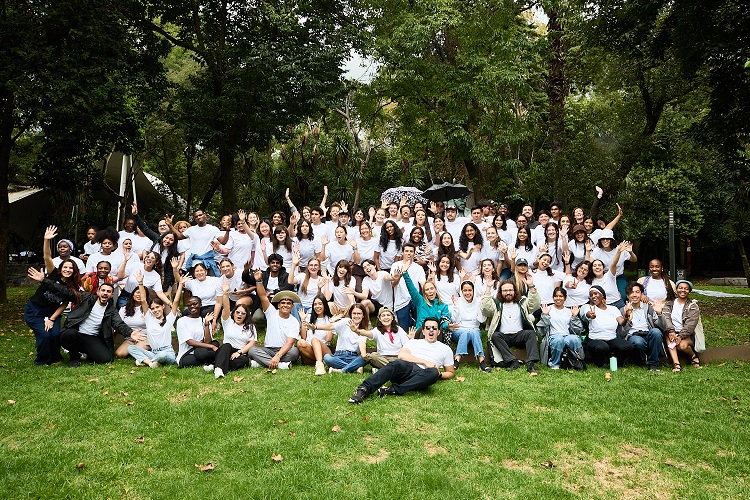
Fellows from beVisioneers: the Mercedes-Benz Fellowship gather during a regional summit, where participants collaborate on planet-positive entrepreneurial projects and community-led solutions.
Entrepreneurship education has long been about building successful businesses. Today’s learners, though, are entering classrooms facing issues previous generations did not have to consider in such an extreme manner: a deep, pervasive anxiety about the environment and climate crisis, and a fast and fundamental disintegration of global governance. Today’s students see a world awash with inequality and disconnection, and experience constant volatility, uncertainty, and ambiguity. While looking to launch a business, they can become overwhelmed by the idea of building ventures that can help meaningfully mend the world.

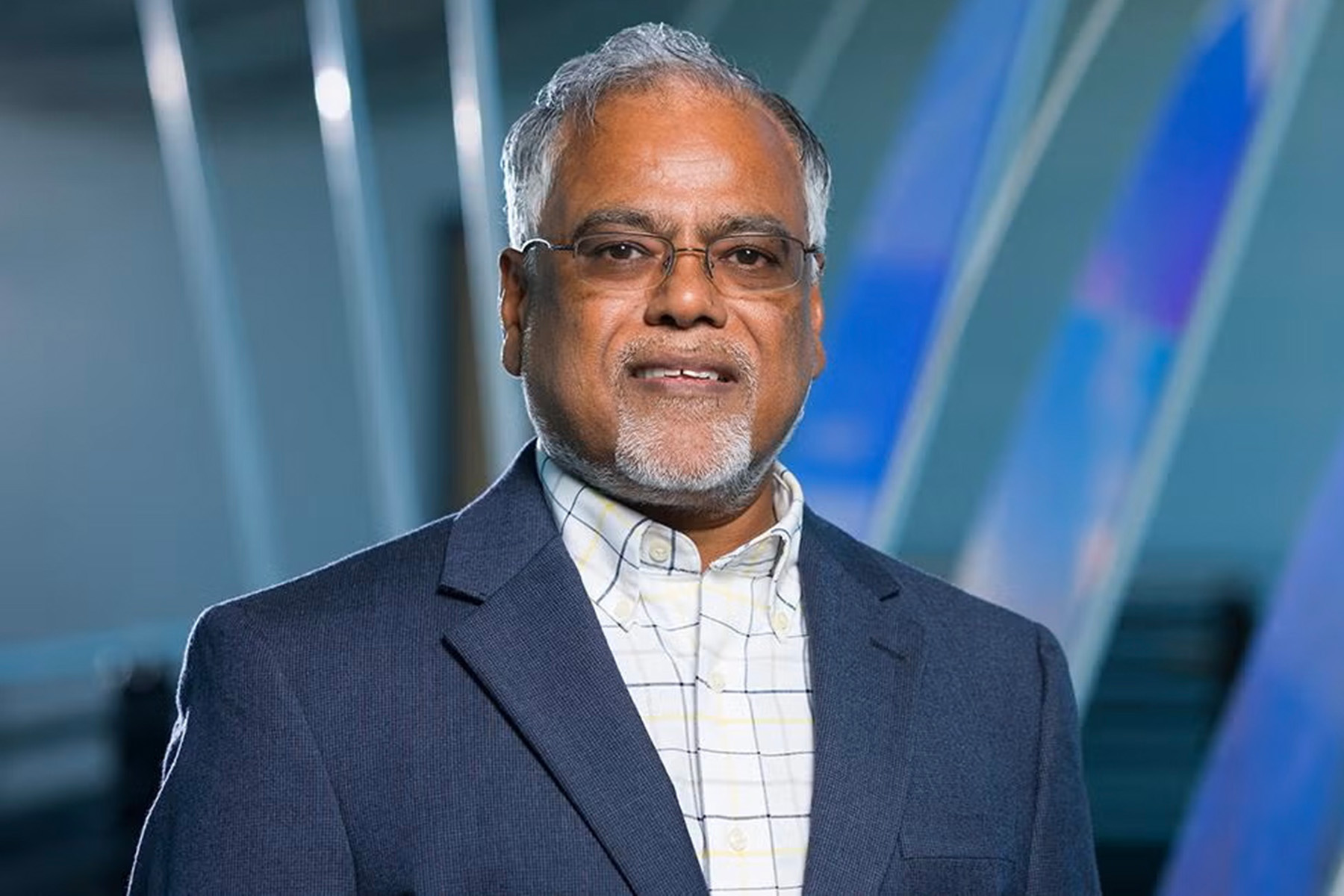
Chiedza Mutsaka Skyum designs learning experiences that help young entrepreneurs move from anxiety to agency through collaborative, systems-focused entrepreneurship education.
They are asking their institutions and the educators building their programs a simple, gut-punch of a question: “What on earth are we being prepared for?”
If we continue to teach entrepreneurship as if the world is stable, predictable, and purely profit-driven, we will fail them. Churning out masses of founders should not be the focus of entrepreneurship education. It should instead be about growing entrepreneurial capability: to collaboratively act, adapt, and imagine solutions in the face of radical, terrifying and daunting uncertainty.
This is where a pedagogy of flourishing becomes non-negotiable. It provides the necessary antidote to pervasive anxiety, and it builds the critical infrastructure to enable students of entrepreneurship to take resilient action. It must emphasize capabilities like collaboration, grit and systems thinking. If designing for flourishing, educators transform entrepreneurship programs from sterile training grounds for profit-maximization to responsive and adaptable playgrounds and laboratories for solving real-world, existential problems.
1) Give students a map: When an aspiring young entrepreneur says, “The world feels like it’s falling apart,” what they’re really communicating is, “I desperately want to help fix it, I just don’t know how.” Entrepreneurship education must provide the “how”; how to work together, how to channel creativity and how to move beyond doom toward starting building systems aligned with planetary and societal well-being. Here’s the thing: anxiety can be useful, compelling data, and fuel to begin to start to change things for the better.
2) Hope isn’t soft: The goal is to move young entrepreneurs from fear to strategic hope. Hope is a skill, it is active and disciplined, a hard-edged practice that allows them to see their agency rather than be spectators. Instead of starting a program with, “What’s broken and who is to blame?” we need to shift the narrative and make it more real and reachable for them. Allow students time to search for where solutions are already emerging, to read about people who are innovating right now in that space. By formalizing the time and space to explore real, tangible examples, they are able to see that change is already happening, and that they too can be a part of it.
3) Innovation is a team sport: Innovation rarely, if ever, happens alone. Why are we still teaching it that way? Through the lens of a pedagogy of flourishing, learning should be co-created. Each entrepreneur learns from the next. The more that we encourage and reward collaboration over individual heroism, the better the ventures that emerge will be. Statistically, founding teams are more favoured by investors, with solo founders making up 35% of startups but only 17% of VC-funded companies (Carta’s Founder Ownership Report (2024/2025 data). The fact is that founding teams are more fundable than lone-wolf founders. To embody best practices, we can and must advance our programs from competitive to collaborative, prioritising shared capability over individual brilliance.

Chiedza Mutsaka Skyum with members of the beVisioneers program team, which designs and delivers entrepreneurship education focused on collaboration, resilience, and long-term impact.
4) Scaffolded structures help agency to win over anxiety: Structure, trust and possibility are what young entrepreneurs need to start creating change. Urge them to experiment, to try; even if they fail, they will build key skills and trust in the process. Micro-prototyping or low-stakes user interviews can help them to shift away from a state of anxiety-produced paralysis toward faith in their ideas and agency. If they go out and have a few conversations with stakeholders experiencing a challenge, or even micro-prototype a simple solution, that small action, whatever it may be, shifts their mindset, and they can become agents of change.
5) Stop teaching linear thinking: The world that young people of today will inherit will not be solved with a 10-step plan or with old tools. This world, the world of today and tomorrow, demands systems thinkers who can analyse, connect, and adapt. If they are armed with futures literacy, they can make wiser choices to get to that future. To develop learners who are future-shapers (not just founders obsessed with valuation), entrepreneurship education must integrate systems mapping and simple futures scenario-building into the curriculum. There must be a shift from producing founders obsessed with short-term “quick profit” financial valuation to those obsessed with long-term, systemic impact.
Educators, you have a choice. We need to build entrepreneurs who can adapt and thereby succeed and contribute to healing the world. If all we rely on is teaching disruption over flourishing both individually and together, then future entrepreneurs will learn how to only break things. Flourishing teaches them to also repair, design, and reimagine things – if we give them the capability to create what comes next.
Author Chiedza Mutsaka Skyum designs learning experiences that help people and organizations create positive change. As Community and Learning Director at beVisioneers: The Mercedes-Benz Fellowship, she builds programs that equip young eco-leaders to develop environmental solutions worldwide. Her work brings together futures thinking and educational experience design to create inclusive, accessible learning spaces, grounded in contemporary research on how people learn and flourish.
Throughout her career, Chiedza has partnered with organizations including the African Union, UNDP, UNESCO, and the Malala Fund to design transformative learning experiences. She stays deeply engaged with emerging learning theories and pedagogical approaches, applying these insights to create programs that work across cultures and communities. Whether working with global institutions or local groups, her goal remains consistent: creating learning environments where people can grow, innovate, and make meaningful impact.
About beVisioneers: the Mercedes-Benz Fellowship: beVisioneers is a global fellowship that equips innovators aged 16 to 28 with the training, expert support and resources to bring their planet-positive ideas to life. The start of the multi-year fellowship is a 12-month hybrid foundational year. During this year, Fellows’ build entrepreneurial skills through challenge-based learning, resulting in launched projects that tackle an environmental issue. Upon completing the intensive foundational year, Fellows continue to strengthen local environmental efforts, scale their projects and develop their leadership skills through our long-term community. Funded by Mercedes-Benz and run by The DO School Fellowships, the beVisioneers is free of charge, and includes living and technology support for those who need it.
© Copyright 2026 Poets & Quants. All rights reserved. This article may not be republished, rewritten or otherwise distributed without written permission. To reprint or license this article or any content from Poets & Quants, please submit your request HERE.
link